


History
The Sydney Anglican Schools Corporation established Thomas Hassall Anglican College in 2000. In that year it had 150 students from Kindergarten to Year 7. The College has experienced rapid growth and in 2011 has 1350 students from Prep to Year 12.
The College has been developed as a single campus providing a seamless transition from the junior, middle to senior years. The establishment of the College has been extensive with an ongoing building program providing a facility strategically located in Sydney's emerging South West growth region close to the M7 and M5.
Our facilities are spacious, modern and well equipped. There is access to a diverse range of resources that engage students in learning both inside and outside the classroom. Its many features include attractive landscape design which creates a sense of space with specialist learning areas shared across the Prep to Year 12 continuum; a well equipped auditorium and extensive playing fields.
| | |
About Thomas Hassall
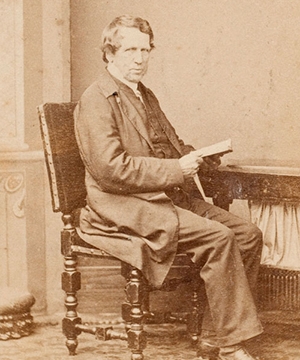
This College is named after a famous early Australian, the Reverend Thomas Hassall who was born in England on May 29, 1794. He came to the young colony of New South Wales with his missionary parents, Rowland and Elizabeth Hassall, in 1798. Walk around Parramatta, even nearby Fairfield, and you will see streets, even schools named after Rowland.
We are proud to be the only school in Australia named after Thomas. As a young man he established the first "Sunday Schools" in Australia, at which the children of the colony were taught reading, writing, maths and the Christian faith. In due course Thomas went back to England to gain his M.A. and train to be an Anglican clergyman. He returned to the colony and established a number of Anglican churches and schools. He gained the affectionate title of "the galloping parson" because of his mode of travel, especially between his home for thirty years at "Denbigh" near Cobbitty and Parramatta. He was thus a frequent traveller along the Cowpasture track!
Throughout his life Thomas had a passion for teaching and learning, a warm heart for people, and a deep love for the Lord Jesus Christ. He was a staunch advocate of the connection between education and Christianity.
Thomas died at Denbigh on 29 March, 1868 and his body was buried beside the church he built in Cobbitty.
Since our commencement in February 2000, we have established a strong relationship with members of the Hassall family, now scattered throughout Australia. We have been presented with a copy of the Hassall Family Coat of Arms. The Hassall Family has raised money for a perpetual, prestigious award that is presented each year to the most outstanding all rounder senior student of the College.
Middleton
On November 1, 2004 the new official name of the area of Liverpool in which the College is located is Middleton Grange. The suburb is named after a World War Two Australian airman - Flight Sergeant Rawdon Middleton. The area has had a long association with aviation, hence the naming of new streets after people and organizations connected to aviation.
Flight Sergeant Rawdon Hume Middleton was born in Waverley on 22nd July, 1916. He joined the RAAF Empire Air Training Scheme in October 1940 and was posted to 149 Squadron RAF Feb 1942. He was killed in action on 29 November 1942.
Flight Sergeant Middleton was captain and first pilot of a Sterling aircraft detailed to attack the Fiat works at Turin (Italy) on 28 November 1942. The aircraft was hit by anti-aircraft fire over the target. Middleton tough badly wounded and struggling to remain conscious managed to keep the plane flying.
Middleton was determined to reach the English channel even though fuel was low and the aircraft had been badly damaged. On reaching the English Channel with sufficient fuel for 5 minutes flying, Middleton flew the aircraft parallel with the English coast and ordered the crew to abandon the aircraft. Five of the crew parachuted from the aircraft but two remained to assist him.
Middleton flew the plane out to sea where it crashed a short time later. He was determined not to crash it on houses as many other pilots had done. All remaining on board were killed.
"Flight Sergeant Middleton was determined not to allow his crew to fall into enemy hands. While all the crew displayed heroism of the highest order, the urge to do so came from Middleton's fortitude and strength of will made possible through the completion of the mission. His devotion to duty in the face of overwhelming odds is unsurpassed in the annals of the RAF." (The London Gazette, 15 January, 1943)
He was the first of only four Australian airmen to be awarded the Victoria Cross. The plaque at the Middleton Rest Area 25km north of Canberra states:
"Dedicated to the memory of a gallant airman
who gave his life for his comrades and his country."
His life and the circumstances of his death contain many lessons from which all of us can learn. The College has a display of photos and replica medals in the 'Middleton Room' for the perpetuation of his legacy to Australia.
In 2007 our new sporting fields were opened by Mr Brian Booth (former Australian Cricket Captain) and were named in honour of Flight Sergeant Rawdon Middleton VC. The College was also honoured to make contact and interview Mr Stuart Bill the author of a book titled "Middleton VC'. It is a well written and researched book about the life of Rawdon Middleton.
House System
Amy Carmichael
Amy Carmichael was an unlikely missionary. The eldest of 7 children in a strict Presbyterian family, Amy suffered from Neuralgia, a condition that left her bedridden, sometimes for weeks at a time. At the age of 20 she became convinced that missionary work in China was her calling and began working toward her goal. She was barred from entry however, and worked as a missionary in Japan for 15 months, then a brief time in Sri Lanka preceded her eventual arrive in India.
In India she founded a mission in Dohnavur which took in orphans, often young girls who were victims of sexual abuse and slavery. Amy Carmichael wrote extensively throughout her missionary work, omitting none of the desperate times and uncomfortable life of a missionary. This set her apart from her companions and allows us to see just how difficult the life of a missionary at the turn of the century was. Amy Carmichael's courage and tenacity in the face of great opposition is an example of how Christian's can stand up for what they believe regardless of their own talents or abilities.
C.S. Lewis
Clive Staple Lewis was born in 1898. He was commonly referred to as C.S. Lewis and known to many of his close friends and family as Jack. C.S. Lewis spent his working life at Oxford University and Cambridge University tutoring students in medieval and Renaissance literature. During this time he became a Christian and dedicated his life to helping people understand Christianity through his writings. This lead C.S. Lewis to write famous literature pieces like The Screwtape Letters, Merely Christianity, and of course The Lion, the Witch and the Wardrobe, plus the six other books that form The Chronicles of Narnia.
Lewis dies in 1963, one week before his 65th birthday. C.S.Lewis has been increasingly remembered and respected in recent years, especially with the release of the movies The Chronicles of Narnia: The Lion, the Witch and the Wardrobe and The Chronicles of Narnia: Prince Caspian. He is remembered as a man who made a major impact on this world as a follower of Jesus.
Eric Liddell
Eric Liddell rose to the very heights of world athletics, beginning to win awards for his all round skill at rugby and sportsmanship when he was only 16 and still in school. When he entered university in 1920, Liddell soon began running in athletic events, and playing rugby for the university and for Scotland in international matches. He travelled to the Paris Olympics in 1924 to contend in two events for which he achieved bronze for the 200m and gold in the 400m, breaking the world record. Liddell's most famous decision was at the Paris Olympics, where he refused to compete in the 100m race because the event was held on a Sunday. The account of his Olympic victory can be highlighted by the major film Chariots of Fire.
Liddell also spent time as a missionary in China, whilst there he taught in schools as a science teacher. When the Japanese invaded China he served by helping wounded soldiers from both sides get to hospital. This was dangerous as the penalty from the Japanese for helping a Chinese soldier was death. He was eventually placed in a Japanese internment camp (Weihsien) where he again served others energetically. He died in Weihsien camp on February 21, 1945 from a brain tumor. Eric Liddell offers a compelling example of how we should live, to be honest and self-sacrificing.
Wilberforce
William Wilberforce was born in 1759, and was raise in Hull, Yorkshire, a flourishing sea port in England. He went to Cambridge University and became a Member of the Houses of Parliament where he worked actively for 28 years. He became increasingly aware of the emptiness of the life of the rich and conscious of his own sins, he submitted to following 'Christ'.
He sought the advice of the infamous John Newton who had once been a notorious slave trader and was now an evangelical pastor (where the song Amazing Grace is from). Newton advised him to stay in politics and serve Christ through Politics.
Wilberforce became known as the 'Christian Politician'. Wilberforce made several legislations in the Houses of Commons addressing increasing problems of public drunkenness, blasphemy, swearing and is most famous for his abolition campaign against the slave trade in 1789.
William Wilberforce died in 1833 age 74, and his memories and determination to 'be all you can be' lives on in the House Sprit of Wilberforce House at Thomas Hassall Anglican College. Wilberforce was a strong Christian and demonstrated wisdom, dedication, enthusiasm, kindness and a determination to succeed.